Run sheets
Four ways a jersey line gets configured
These are build patterns, not client stories. We do not publish other people's event data, and we are not going to invent a testimonial to fill a page. What we can do is show you how the same crew and the same equipment get arranged for four genuinely different problems — and what changes in each.
Pattern one
The outdoor kit studio
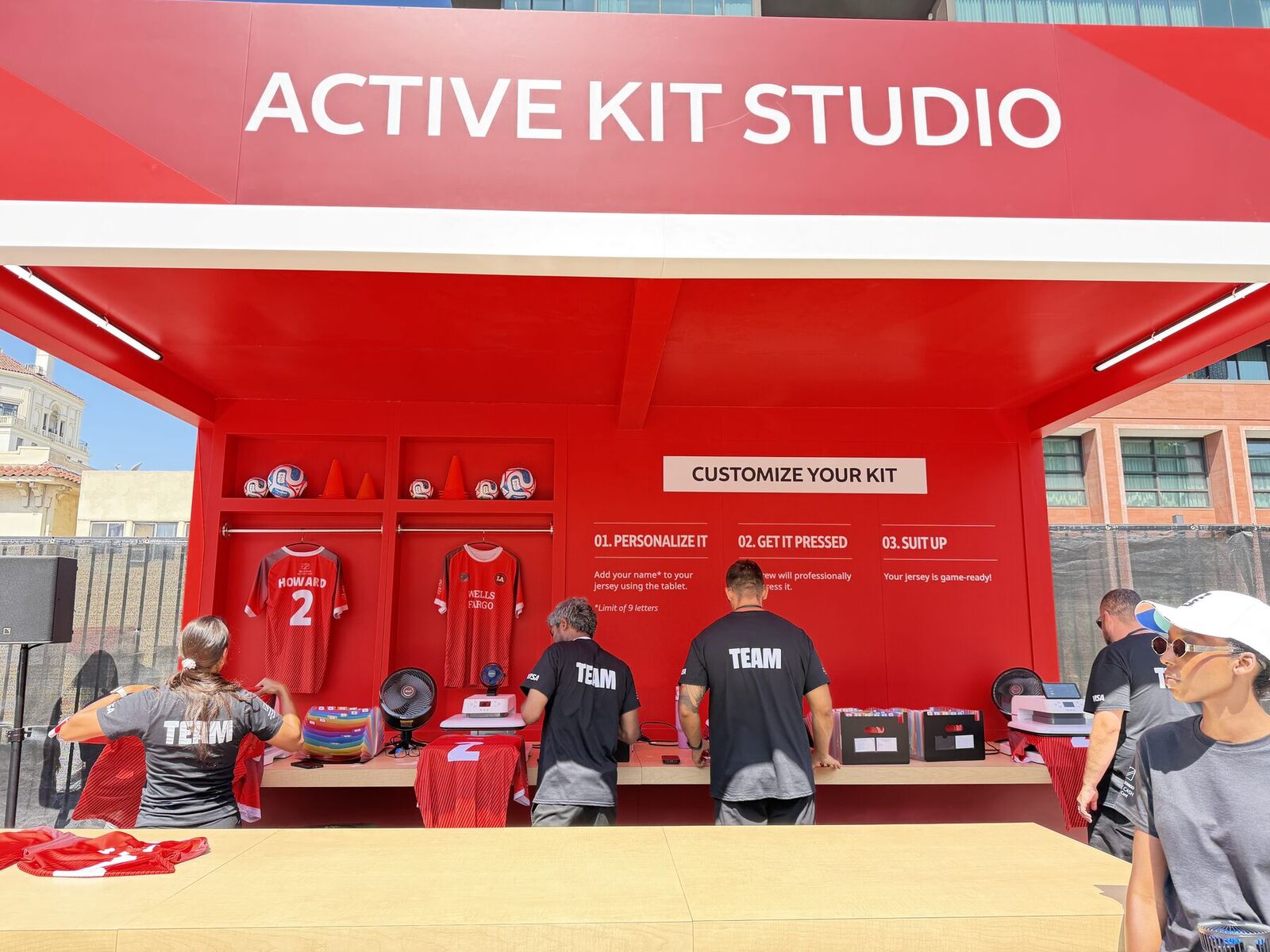
A built structure with locker bays, a long intake counter, tablet stations and a pressing crew working behind it. This is the format in our photography, and Merch Troop crews have run it at outdoor sport activations with hundreds of guests queuing.
What makes it work: the guest path never crosses the crew path. Guests approach the counter, personalize on a tablet, then step aside. Finished jerseys go into the bays and are called by ticket. The presses are visible — deliberately, because watching a name go on is half the appeal — but nobody stands in front of them.
What it demands: a real power plan, shade or ventilation for the operators, and enough staged inventory that a runner can restock without walking off the footprint. Outdoor heat plus press heat is a genuine crew-welfare issue, not a footnote.
Pattern two
The roster job
A team, league or sponsor already owns the jerseys and already has the names. This is the fastest configuration we run, and the cheapest per unit, because it removes both of the expensive unknowns.
Names collected in advance get gang-printed onto transfer sheets before the event and sorted alphabetically. On site, an operator is not printing — they are picking a pre-made transfer, aligning it, and pressing. That collapses the cycle dramatically compared to walk-up personalization.
The catch: roster data is always dirtier than the client believes. Nicknames, accented characters, names over the nine-character limit, duplicate numbers on the same team. We ask for the list early specifically so we can clean it, flag the over-length names back to you, and let you make the call rather than an operator making it at the press.
The hybrid: most roster jobs still want a walk-up lane for guests, staff and family. Pre-printed transfers feed the fast lane; the walk-up lane runs live. Two different cycle times, one queue board.
Pattern three
The high-peak activation
Doors open, a keynote lets out, or a match ends, and eighty percent of your demand arrives in twenty percent of your window. Sizing for the average guarantees a bad opening hour.
How we handle it: extra lanes staffed only for the peak block, a hard queue cap that closes intake when pending work exceeds what the lanes can clear before close, and text-when-ready for premium tiers so the physical line stops being the bottleneck on the guest's experience.
What we ask you for: the run of show. Not a summary — the actual schedule. If we know a session lets out at 3:40, we staff for 3:40. Planners who share the run of show get a materially better station than planners who share a guest count.
Pattern four
Jerseys as one station in a bigger footprint
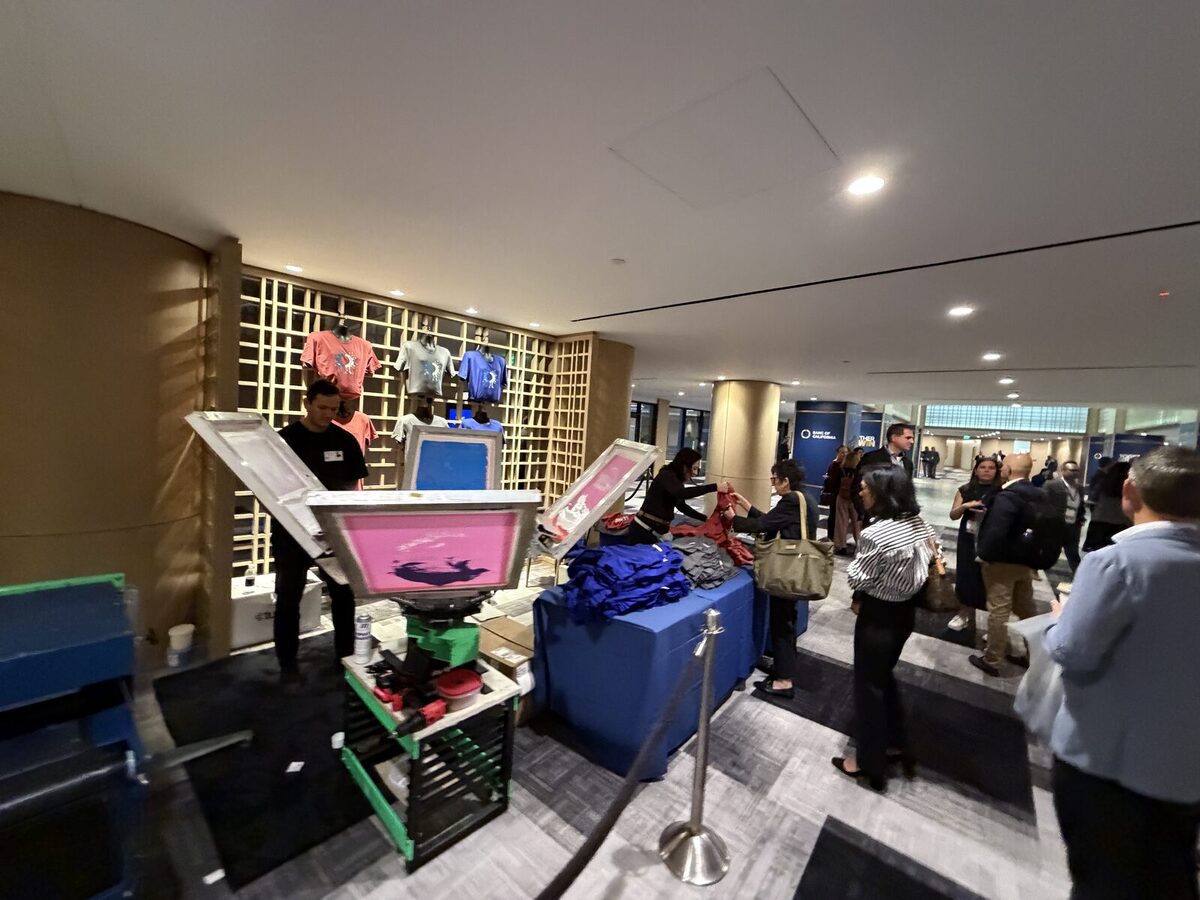
Plenty of activations do not want a jersey-only build. They want jerseys plus a hat bar, or jerseys plus live tees, or jerseys alongside patch application and stickers. The jersey lane is usually the anchor because it has the longest dwell and the best photo, and the lighter stations absorb the overflow while people wait.
Why it prices well: one crew, one load-in, one power plan. Adding a second decoration station to a crew already on site costs far less than booking it as a separate engagement.
Why it needs planning: shared queues confuse guests. Each station gets its own intake and its own ticket series, even when the crew is shared. Merging them into one line is the fastest way to make a well-staffed footprint feel slow.
Ready to size yours?
Tell us which pattern sounds closest and we will build the lane math around it. Pricing inputs or send the brief.